
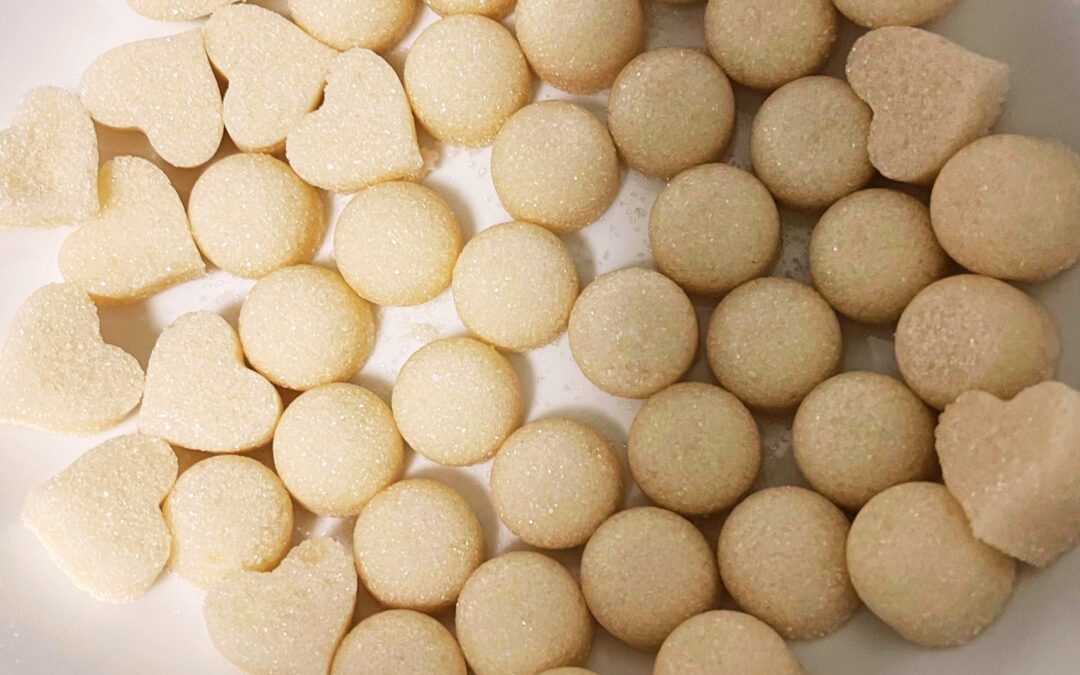
Homemade Sugar Cubes
So, I was listening to one of my friends constantly complain for months that they can no longer buy sugar cubes. She could not find them in any grocery store. Using low calories sweeteners was not something that she wanted to do. This is a very fit person but has a sweet tooth when it comes to coffee or tea and needs a sugar fix. If you’re a senior and not concerned about your sugar, and she wasn’t, then, using the cubes to sweeten your tea/coffee is your decision. You and your doctor know best! Just because we were born prior to 2000 and life tells us we cannot eat certain things, I say “Moderation” and ask the health professionals because what is right for some, is not good for others.
 Thank goodness for google and chocolate molds! I found a few small chocolate molds in Michaels and knew they would work. The recipe were so easy so I thought I would make my friend sugar cubes without telling her in case they did not come out good. Happy Birthday, they came out adorable!
I did use organic cane sugar so the cubes are not white. Perhaps they might be healthy sugar cubes!
The Current Scientific Consensus
-
- Calculate daily sugar limits based on American Heart Association Guidelines
The Age of Natural Sugar: Status to Staple
-
- Pre-19th Century: Before cane sugar, humans relied on naturally occurring sweeteners like honey, dates, and fruits. Cultivation of sugarcane began over 10,000 years ago in New Guinea, eventually spreading to India and the Middle East.
- Industrialization: In the 17th and 18th centuries, sugar transitioned from a rare medicinal luxury to a mass-produced staple.
- Health Reckoning: As global consumption skyrocketed, sugar was linked to tooth decay, obesity, and metabolic issues. However, the industry downplayed these risks. In the 1960s, the Sugar Research Foundation paid Harvard scientists to blame fat and cholesterol for heart issues instead of sugar. Today, refined sugar is widely recognized as a major contributor to Type 2 diabetes and cardiovascular disease when consumed in excess.
- Saccharin (1879): The first artificial sweetener was discovered accidentally by a Johns Hopkins researcher working on coal tar derivatives. It gained massive popularity during wartime sugar shortages and via brands like Sweet’N Low. In 1977, the FDA attempted to ban it after it was linked to bladder cancer in rats, though later studies proved it safe for humans.
- Aspartame (1965): Discovered by accident during anti-ulcer drug research. It became the cornerstone of the “diet” food boom in the 1980s. Its safety and potential cancer links have been the subject of heavy debate. In 2023, the WHO’s cancer research agency classified it as a “possible carcinogen to humans” while reaffirming it is safe within acceptable daily limits.
- Sucralose (1976): Created by a pesticide research team who were modifying sugar molecules with chlorine. Marketed as Splenda, it became heavily utilized in baked goods and diet products, but critics raise concerns about the regular consumption of chlorinated compounds.
- Sugar Alcohols & Novel Sweeteners: Compounds like Erythritol, Xylitol, Stevia, and Monk Fruit offer lower calories but have come under scrutiny for links to digestive distress or increased risks of cardiovascular events.
Reference google search: https://www.google.com/search?q=history+of+sugar+vs+unhealthy+sweeteners&sca_esv=92bb7c0feee8c152&rlz=1C1GCEA_enUS834US834&ei=B_YmarK7IaH8ptQP87ixmAU&biw=1500&bih=692&ved=0ahUKEwjy2vL8j_iUAxUhvokEHXNcDFMQ4dUDCBA&uact=5&oq=history+of+sugar+vs+unhealthy+sweeteners&gs_lp=Egxnd3Mtd2l6LXNlcnAiKGhpc3Rvcnkgb2Ygc3VnYXIgdnMgdW5oZWFsdGh5IHN3ZWV0ZW5lcnMyBRAhGKABMgUQIRigATIFECEYoAEyBRAhGKABMgUQIRigATIFECEYnwUyBRAhGJ8FMgUQIRifBUiGZVAAWNFbcAB4AZABAJgBqQGgAYkWqgEEMzYuNLgBA8gBAPgBAZgCKKACxxfCAgsQABiABBiKBRiRAsICChAAGIAEGIoFGEPCAhMQLhiABBiKBRhDGLEDGMcBGNEDwgIXEC4YgAQYigUYjQYYsQMYxwEYrwEYjgXCAgsQABiABBixAxiDAcICCBAuGIAEGLEDwgIREC4YgAQYsQMYgwEYxwEY0QPCAhAQABiABBiKBRhDGLEDGIMBwgIIEC4YsQMYgATCAgsQLhiABBixAxiDAcICCBAAGIAEGLEDwgIFEAAYgATCAhMQABiABBiKBRhDGLEDGIMBGMkDwgILEAAYgAQYigUYkgPCAgoQLhiABBiKBRhDwgINEAAYgAQYigUYQxixA8ICBRAuGIAEwgILEC4YgwEYsQMYgATCAgYQABgWGB7CAgsQABiABBiKBRiGA8ICCBAAGIkFGKIEwgIFEAAY7wXCAgUQIRirApgDAJIHBDM0LjagB9ynArIHBDM0Lja4B8cXwgcJMC4xOC4yMC4yyAeGAYAIAQ&sclient=gws-wiz-serp